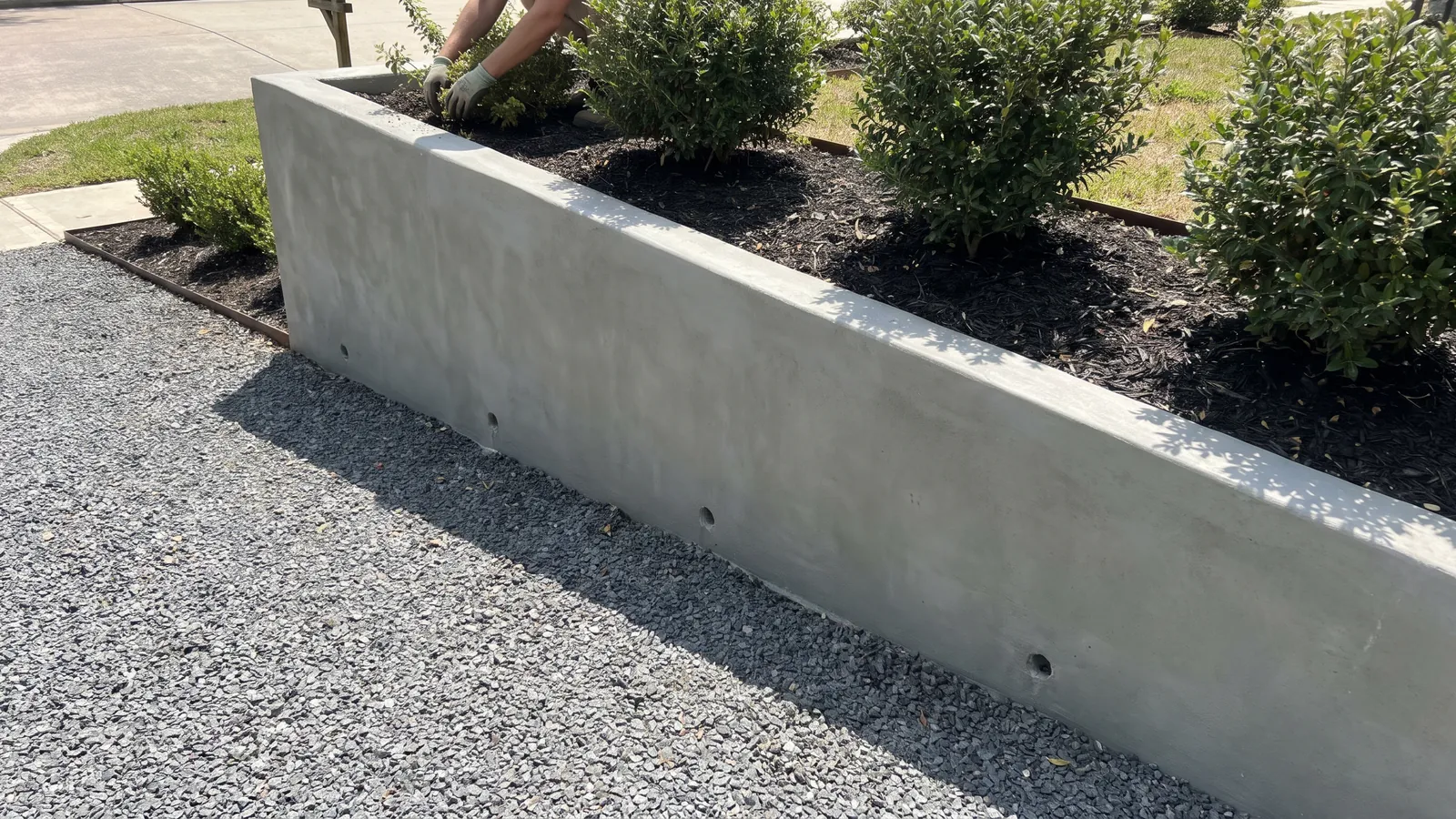
Houston isn't hilly, so retaining walls here are usually modest: a raised bed or terrace a couple of feet high, a wall where a driveway is cut down to meet the street, a step-down along a property line where a newer lot was built up higher than the old one next to it, a seat wall around a patio, or a wall along the slope down to a bayou or drainage ditch. Small as they are, they hold back clay that gets very heavy when it's soaked, and that wet clay pushing on the back of the wall is what tips and cracks poorly built ones.
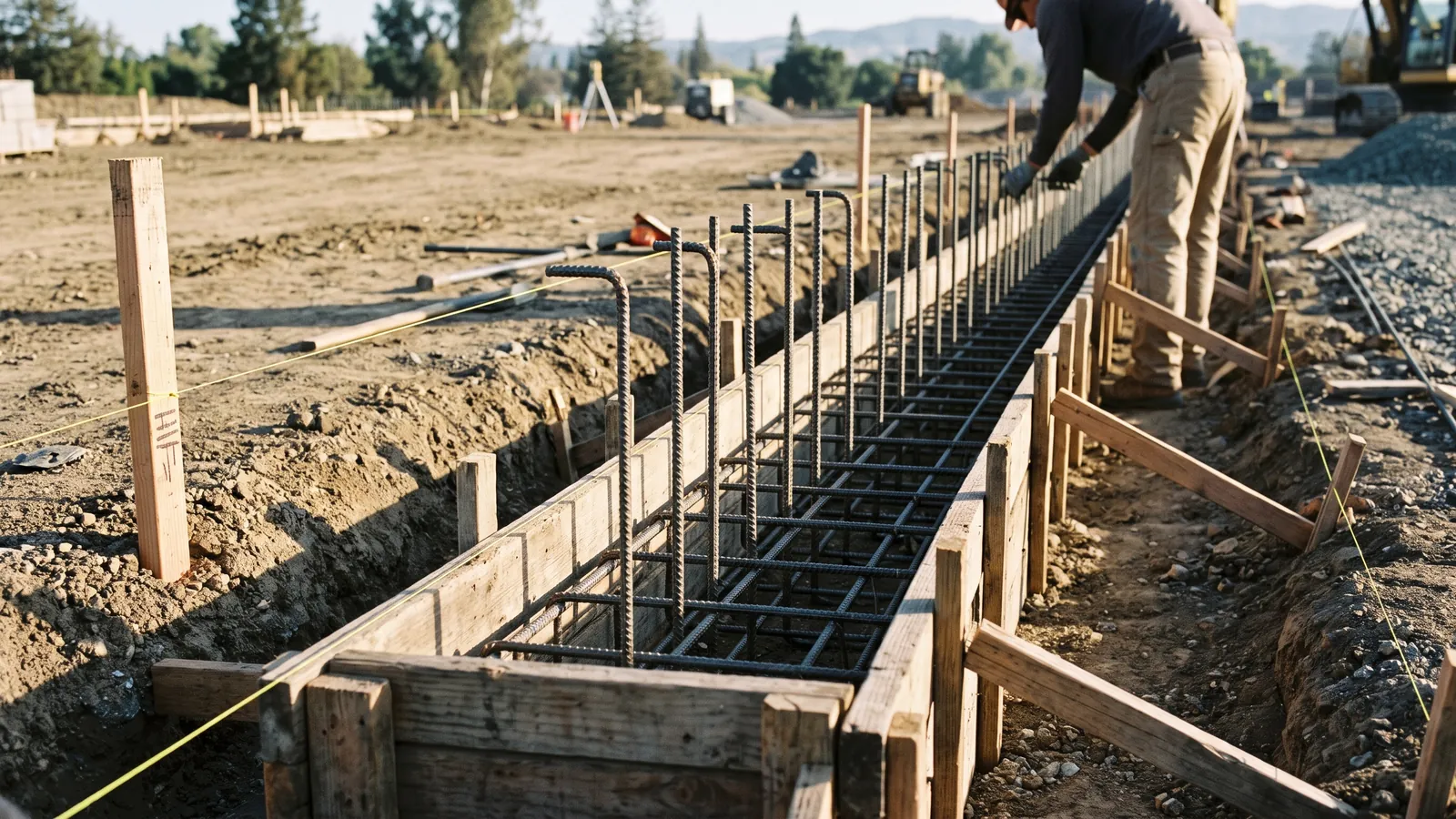
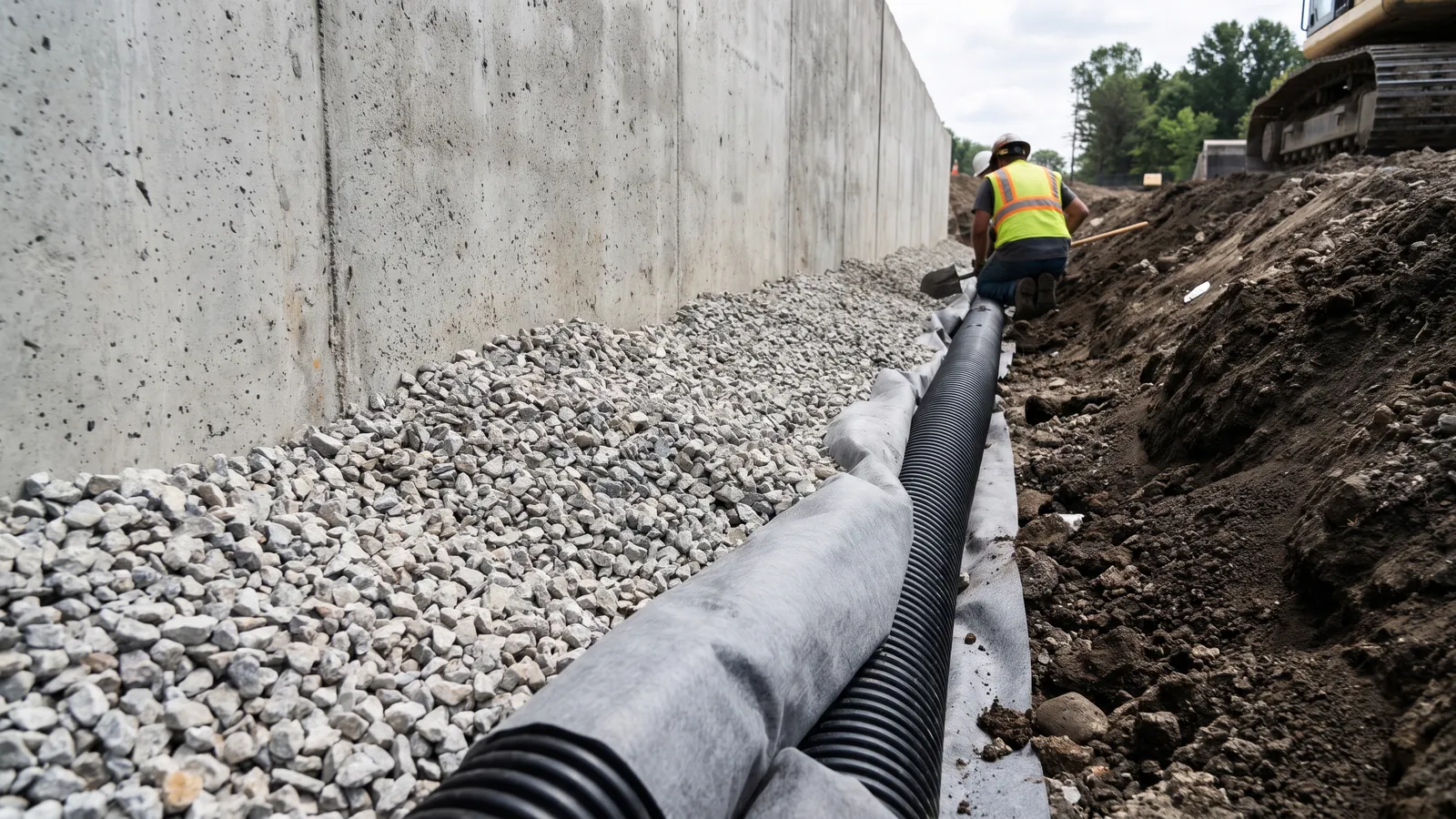
A poured concrete wall from us starts with a footing below the soft topsoil, wider than the wall itself, with steel in it and dowels standing up to tie into the wall. The wall is formed and poured with vertical and horizontal rebar sized for its height. Behind it goes the part that matters most in Houston: drainage. That means clean gravel backfill against the wall, a perforated drain pipe at the base wrapped in filter fabric and run to daylight or a yard drain, and weep holes through the wall so water never builds up pressure behind it.
Height changes the rules. Walls taller than about four feet, measured from the bottom of the footing, or walls that hold up a driveway, a building or a slope above them, are generally treated as engineered structures that need a design and often a permit. We build those to an engineer's drawings. For lower walls we follow sound practice and tell you plainly where the line is. Walls near bayous, ditches or drainage easements can also fall under flood-control rules, so we check before we dig.
Finish is up to you: smooth form finish, a rubbed finish, a cap, a stucco or stone veneer, or a board-formed texture for a modern yard.
What the job includes
Footing below the topsoil
A wide, reinforced footing on firm soil, with dowels tying it to the wall.
Steel for the height
Vertical and horizontal rebar in the wall, sized and spaced for how tall it is and what it holds.
Gravel and drain pipe
Clean gravel backfill and a wrapped perforated pipe at the base, run to daylight or a drain.
Weep holes
Openings through the wall so trapped water can't push it over.
Engineered where required
Taller and surcharged walls built to an engineer's drawings, with permits where the jurisdiction requires.
Finish to match the yard
Smooth, rubbed, capped, veneered or board-formed.
Retaining walls prices in Houston
| Item | Typical 2026 range | Notes |
|---|---|---|
| Poured wall up to about 3 ft, with footing | $45 – $90 per face sq ft | Drainage included |
| Seat wall around a patio | $70 – $140 per linear ft | Cap and finish extra |
| Wall at a driveway cut | $60 – $110 per face sq ft | Often tied to driveway work |
| Engineered wall over 4 ft | Quoted from drawings | Design and permit separate |
| Drain pipe and gravel behind an existing wall | $25 – $60 per linear ft | Where a wall is weeping or leaning |
| Stone or stucco veneer | + $15 – $40 per face sq ft | Over the poured wall |
These are Houston-area budgeting ranges for 2026, not quotes. Your price comes on a free written estimate after we measure, with each line itemized.
On the job
Questions about retaining walls
Do I need a permit for a retaining wall in Houston?
Low garden walls often don't, but taller walls, walls that support a driveway or structure, and walls in easements or near drainage channels can need permits and engineering. Rules vary by city, so we check for your address.
Why is my old wall leaning?
Most leaning walls are losing a fight with water. Without gravel backfill and drainage, wet clay pushes on the back of the wall until it tips or cracks. Adding drainage can help a wall that's only started to move; a badly leaning wall usually needs rebuilding.
Concrete or block?
Both work when built right. Poured concrete gives a monolithic wall with steel exactly where it's needed and a clean finish; segmental block is easier to curve and to expand later. We build poured walls.
Can you build along a bayou or ditch?
Sometimes, with conditions. Work near bayous and drainage channels in Harris County may fall under the Flood Control District's rules, and some edges are in easements where nothing can be built. We check before quoting.
How long does a poured wall take?
A small wall is typically a few days: dig and footing, forming and steel, the pour, then stripping forms and backfilling with gravel after the concrete has set.