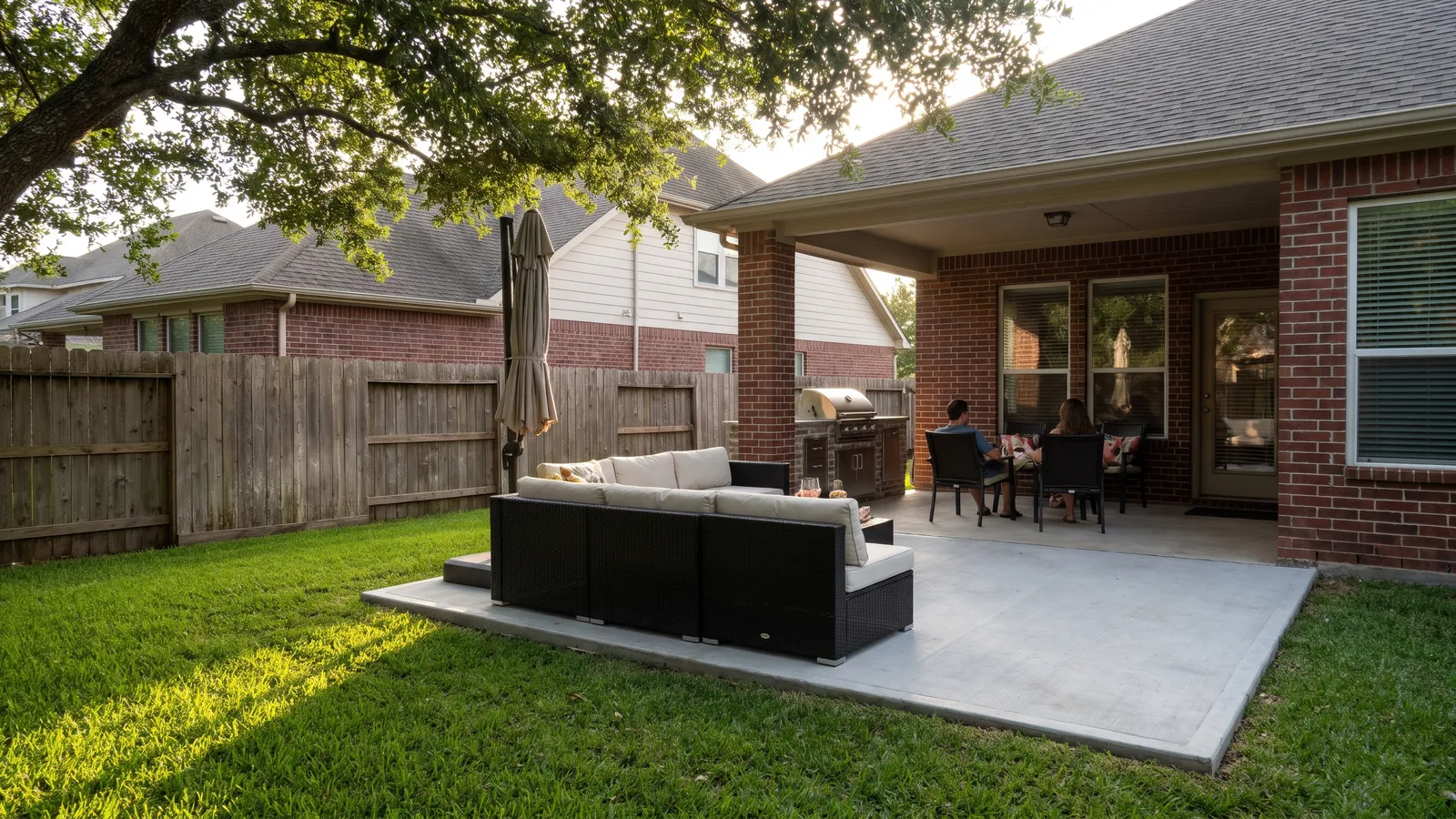
Patio work in Houston falls into a few shapes. The most common is the builder's small square slab behind the back door that a family has outgrown, extended out toward the fence to make room for a table, a grill and a fire pit. The next is a brand-new slab in a yard that never had one. The third is the floor under a new patio cover or outdoor kitchen, where the slab needs to carry posts and sometimes a masonry grill, and where the cover's builder or the city may want footings at the post locations.
Whatever the shape, the first conversation is about water. Most Houston lots are nearly flat, the clay soaks up rain slowly, and a patio poured level, or worse, pitched toward the house, sends water to the foundation every time it storms. We set the fall away from the house, usually about a quarter inch per foot, and look at where that water goes next: a swale along the fence, a yard drain, or the side yard toward the street. If the yard already holds water after a storm, we tell you before pouring, because a patio makes the runoff bigger, not smaller.
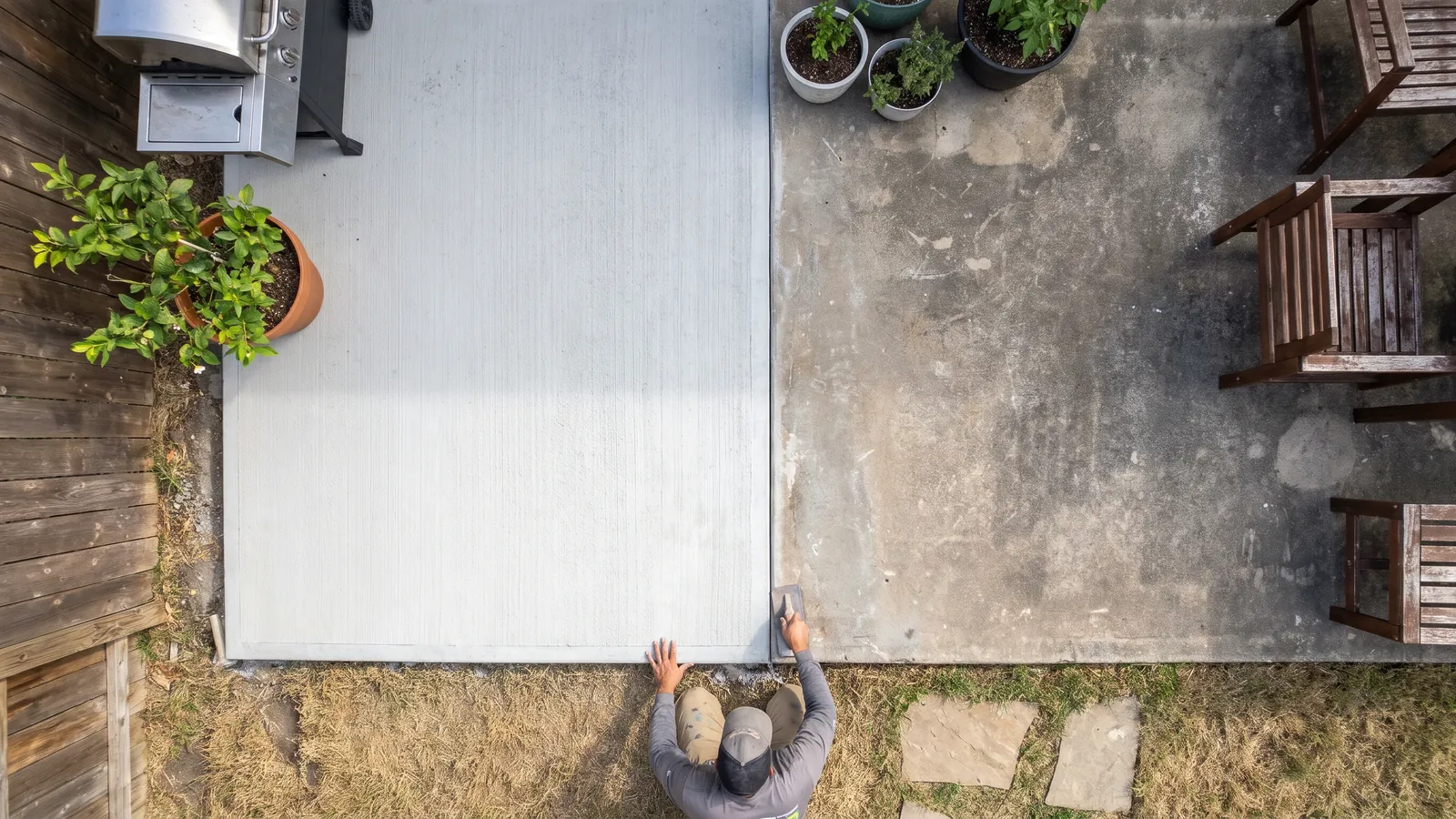
An extension is tied to the old slab with dowels drilled and set in epoxy, with an isolation joint between them so the two pieces can move separately on the clay. We don't promise the new concrete will match the old one's color; new concrete is lighter and the difference softens over months. If the match matters, a stain, a stamped border or an overlay across both can make it one surface.
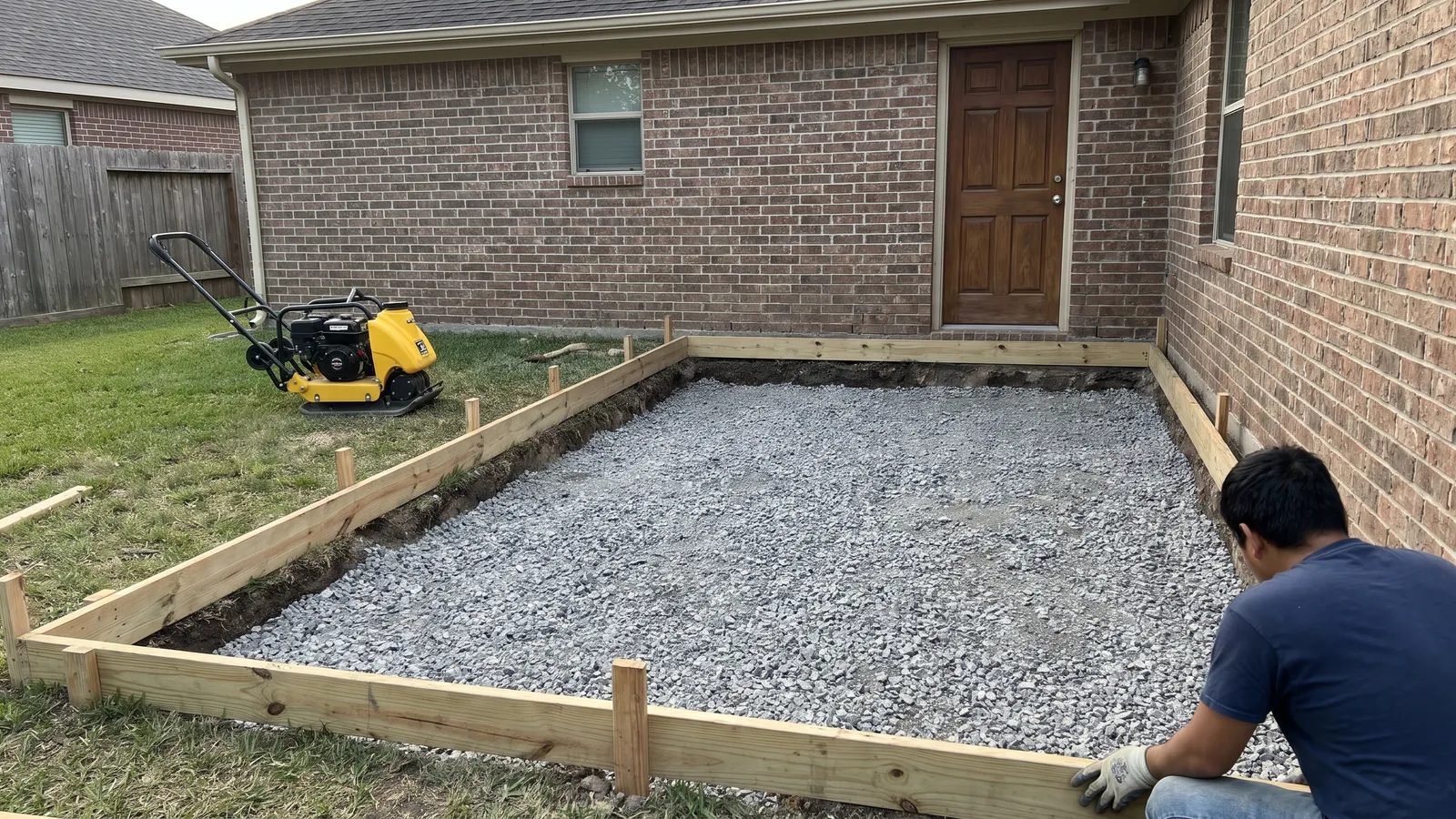
The slab itself is usually four inches on compacted base with a rebar grid, joints cut in a pattern that fits the shape, and a finish that suits bare feet: a light broom, a smooth trowel with a texture, or a stamped or exposed-aggregate surface. In full sun, lighter colors stay noticeably cooler than dark ones. We pour early in summer and keep the slab damp or sealed with curing compound while it sets.
What the job includes
Fall away from the house
Slope set before forming, with the runoff path checked so water heads to a swale, drain or side yard.
Doweled extensions
New slab pinned to the old one with epoxied dowels and separated by an isolation joint.
Ready for a cover
Thickened sections or footings at post locations when a patio cover or outdoor kitchen is planned.
Base and steel
Compacted crushed base and a rebar grid on chairs, the same as a driveway, scaled to the use.
Joints that fit the shape
Control joints laid out so corners, curves and the house wall don't start random cracks.
A finish for bare feet
Light broom, textured trowel, stamped or exposed aggregate, with lighter colors for full-sun yards.
Patios prices in Houston
| Item | Typical 2026 range | Notes |
|---|---|---|
| New patio slab, 4 in, broom finish | $8 – $13 per sq ft | Base, rebar and joints included |
| Patio extension doweled to the old slab | $9 – $14 per sq ft | Small jobs cost more per foot |
| Floor for a patio cover, with post footings | $10 – $16 per sq ft | Footing size per the cover's plan |
| Stamped or colored patio | $14 – $24 per sq ft | See stamped concrete |
| Removal of an old patio or pavers | $2 – $4 per sq ft | Haul-off included |
| Yard drain or swale tied to the patio | $400 – $1,800 | Depends on run length and outlet |
These are Houston-area budgeting ranges for 2026, not quotes. Your price comes on a free written estimate after we measure, with each line itemized.
On the job
Questions about patios
How big should a patio be?
For a table for six, plan on about 12 by 12 feet of clear space; add room for a grill and a walkway around the furniture. Many Houston extensions end up 14 to 16 feet deep from the house.
Can you pour against my foundation?
We pour next to it with an isolation joint and a fall away from it, and we keep the patio surface below the weep holes in the brick. Concrete poured high against the house traps water at the wall.
Will my new patio match the old one?
Not at first. New concrete is lighter, and texture differs. If you want one look, a stamped border, a stain or an overlay across both slabs ties them together.
Is a patio permitted in Houston?
A flat slab entirely in your backyard is often handled differently from a driveway or a structure, but patio covers, outdoor kitchens and work near easements can need permits or HOA approval. We check the rules for your address and your HOA before pouring. See permits.
How do I keep a patio cool in summer?
Choose a light color, skip dark stains in full sun, consider a broom or salt finish over a slick sealer, and add shade. A cool-deck style coating is another option, mostly used around pools.