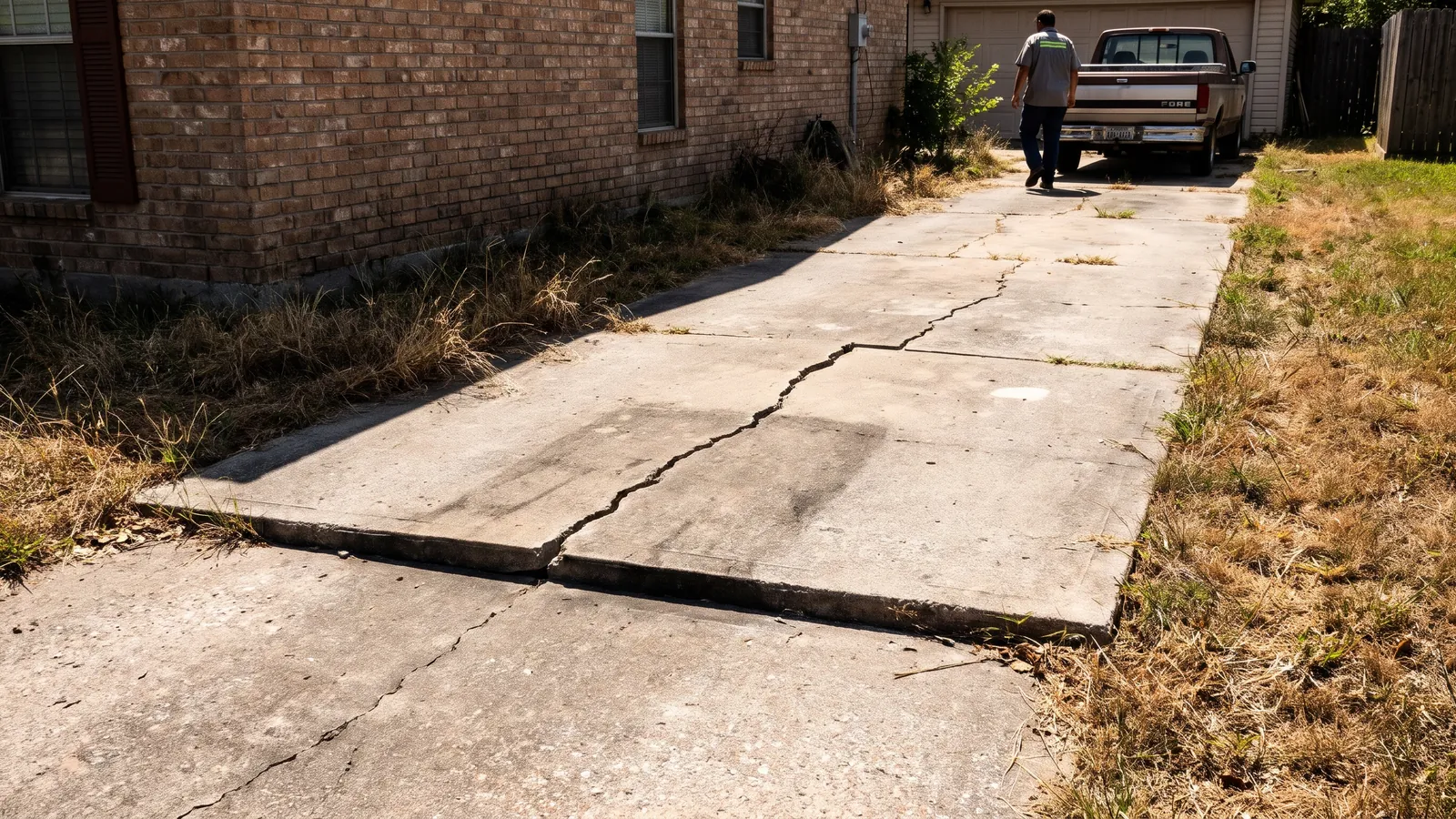
Every Houston slab cracks somewhere. What matters is the kind of crack. A hairline crack that stays tight and flat, often running from a corner or along a joint that was cut a little late, is cosmetic; sealing it keeps water and grass out. A crack that has opened wider than a pencil lead, or one with one side higher than the other, means the concrete has moved, usually because the clay under one panel shrank or swelled more than under its neighbor, or because water has been washing out the base. A panel broken into pieces, sunken at a corner or rocking underfoot, has lost its support.
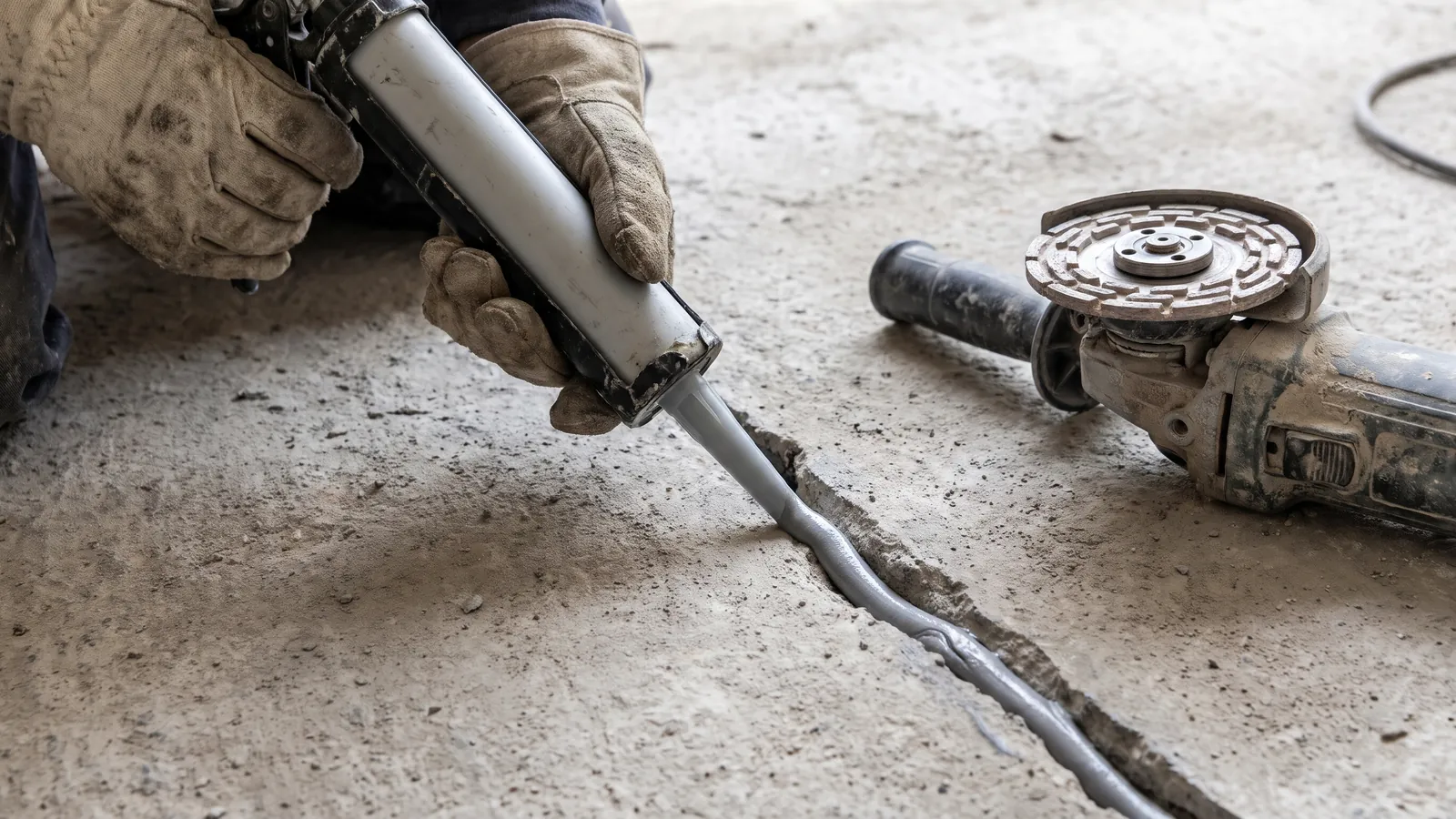
For live cracks we rout the crack open to a clean, even groove and fill it with a flexible polyurethane or silicone sealant made for exterior concrete, which moves with the slab instead of popping out like rigid patch does. For spalling and scaling, the flaking surface you see where de-icer was never the issue but a hot, fast-dried finish or a weak top layer was, we grind back to sound concrete and apply a bonded repair mortar, or resurface the whole panel so it doesn't look patched.
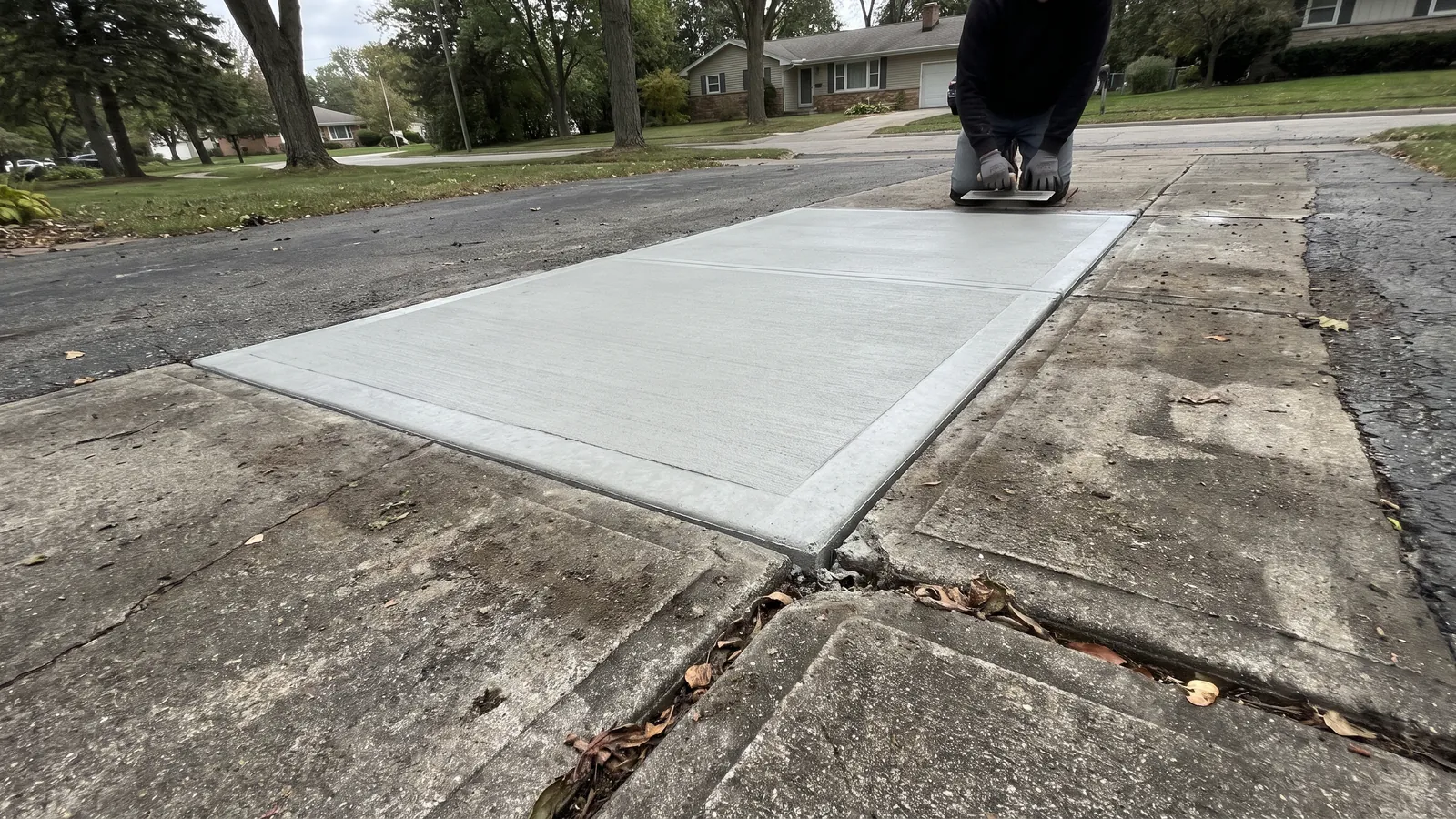
When a panel is broken or has dropped badly, the fix is to saw-cut it out along its joints and pour a new one. We check and rebuild the base underneath, drill and epoxy dowels into the panels on each side so the new one can't drop away from them, and finish it to match the texture of the rest. The color won't match on day one. Where a whole run of panels has sunk evenly but is still in one piece, slab lifting can cost far less than replacement.
We also look for the cause. A downspout dumping at the edge of the drive, a missing gutter, a sprinkler head soaking one corner, a big tree drinking the soil dry on one side, or a washout under the slab from a broken drain line all show up in the cracks. Fixing the concrete without fixing the water usually means another call in a year.
What the job includes
Cracks routed and sealed
Grooves cut clean and filled with flexible exterior sealant that moves with the slab.
Spalls and scaling repaired
Loose surface ground back to sound concrete and rebuilt with bonded repair mortar or a resurfacer.
Panels cut out and repoured
Broken or dropped panels saw-cut on their joints, the base rebuilt, dowels set, new concrete placed.
Trip edges and lips
Small offsets ground flush; larger ones lifted or replaced.
The cause found
Downspouts, sprinklers, roots, drain-line washouts and grading checked so the repair lasts.
Repair or replace, priced side by side
When it's close, both options on the estimate with what each buys you.
Repair prices in Houston
| Item | Typical 2026 range | Notes |
|---|---|---|
| Crack routing and sealing | $3 – $8 per linear ft | Minimum trip charge applies |
| Minimum repair visit | $300 – $500 | Small crack and patch jobs |
| Spall patch with repair mortar | $150 – $450 per area | Depends on size and depth |
| Resurface a worn panel or slab | $4 – $8 per sq ft | Polymer-modified overlay |
| Saw-cut and replace a driveway panel | $12 – $20 per sq ft | Base rebuilt, dowels set |
| Grind a trip edge flush | $150 – $350 | Per offset, with minimum |
These are Houston-area budgeting ranges for 2026, not quotes. Your price comes on a free written estimate after we measure, with each line itemized.
On the job
Questions about concrete repair
Should I seal cracks in my driveway?
Yes, once they're wider than a hairline. Open cracks let water reach the base, which washes it out and lets the panel settle. A flexible sealant is cheap insurance.
Why did my patched crack open up again?
Rigid patch and caulk from a tube can't move with a slab that's riding Houston clay. A routed crack filled with flexible exterior sealant lasts much longer, and fixing the water source matters more.
Can you match the color of my old concrete?
Not exactly, and anyone who promises it is guessing. New concrete is lighter and evens out over months. A resurfacer or stain across the whole area can make it uniform if that matters to you.
Is a cracked driveway a sign of a foundation problem?
Usually not. Driveways and patios are separate slabs with far less structure than a house foundation. If you also see cracked brick, sticking doors or sloping floors inside, have the foundation looked at by a specialist.
When is replacement the better buy?
When most panels are broken, the base has washed out across the slab, or the drive was poured too thin or without steel. Patching a slab like that only spreads the cost over more visits.