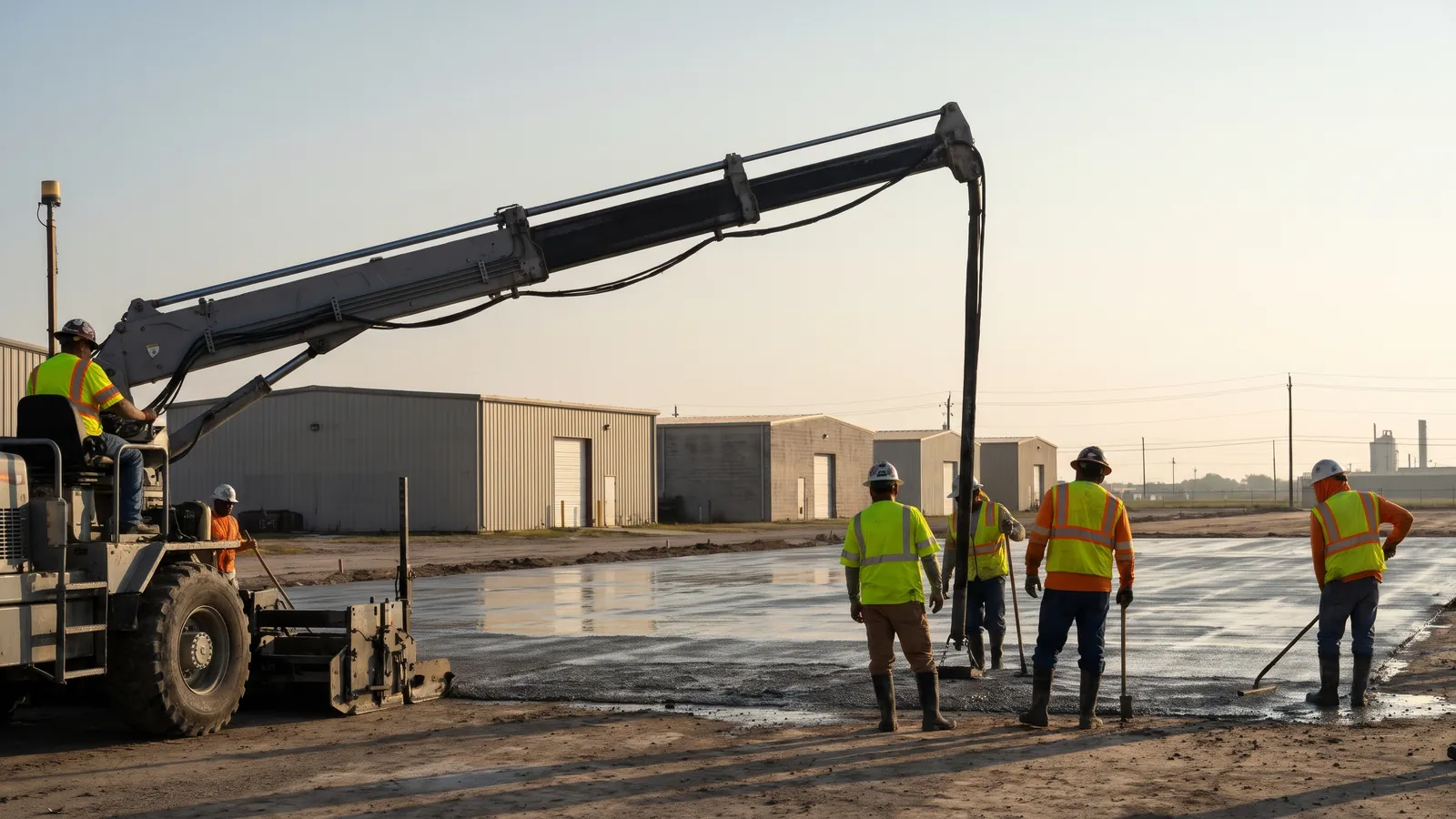
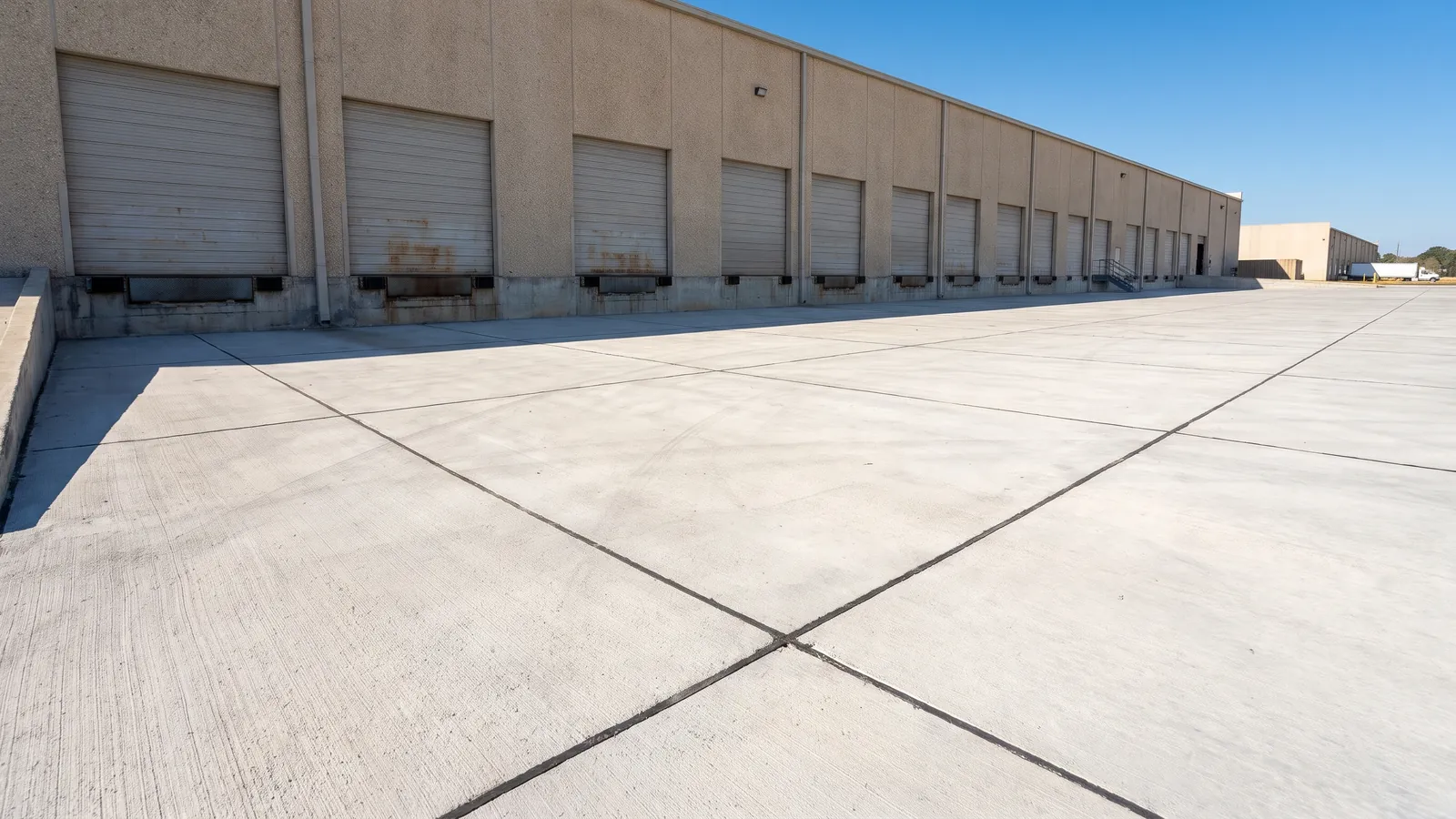
Our commercial work is flatwork: parking areas and drive lanes for strip centers, offices, churches and apartment communities; truck aprons and dock pads at warehouses along the Beltway and the Ship Channel side of town; dumpster pads that the waste hauler's front-loader keeps breaking; curb and gutter; sidewalks and accessible ramps; equipment pads; and repair and replacement of failed panels in existing lots. We don't build tilt-wall buildings or high-rise structures. We do bring the same care for base and joints that residential work gets, scaled up for heavier loads.
Loads drive the spec. A parking stall sees cars; a fire lane, a dumpster approach or a dock apron sees heavy trucks turning their wheels in place, which is what breaks thin concrete. Commercial pavement is usually designed by the project's civil engineer, who sets thickness, steel and joint spacing from the traffic and the soil report, and we build to those plans. For repair work on an existing lot without plans, we match or exceed the original section and tell you where the original was the problem.
Keeping the business running is usually the hardest part. We phase work so part of the lot stays open, sequence pours for nights or weekends where traffic allows, coordinate with property managers on tenant notices, and keep fire lanes and accessible routes usable. Inside the City of Houston, work on commercial driveways, sidewalks and curbs in the right-of-way goes through the City's commercial driveway, sidewalk or curb permit with plan review and inspection; work on private property can need its own permits depending on the scope.
What the job includes
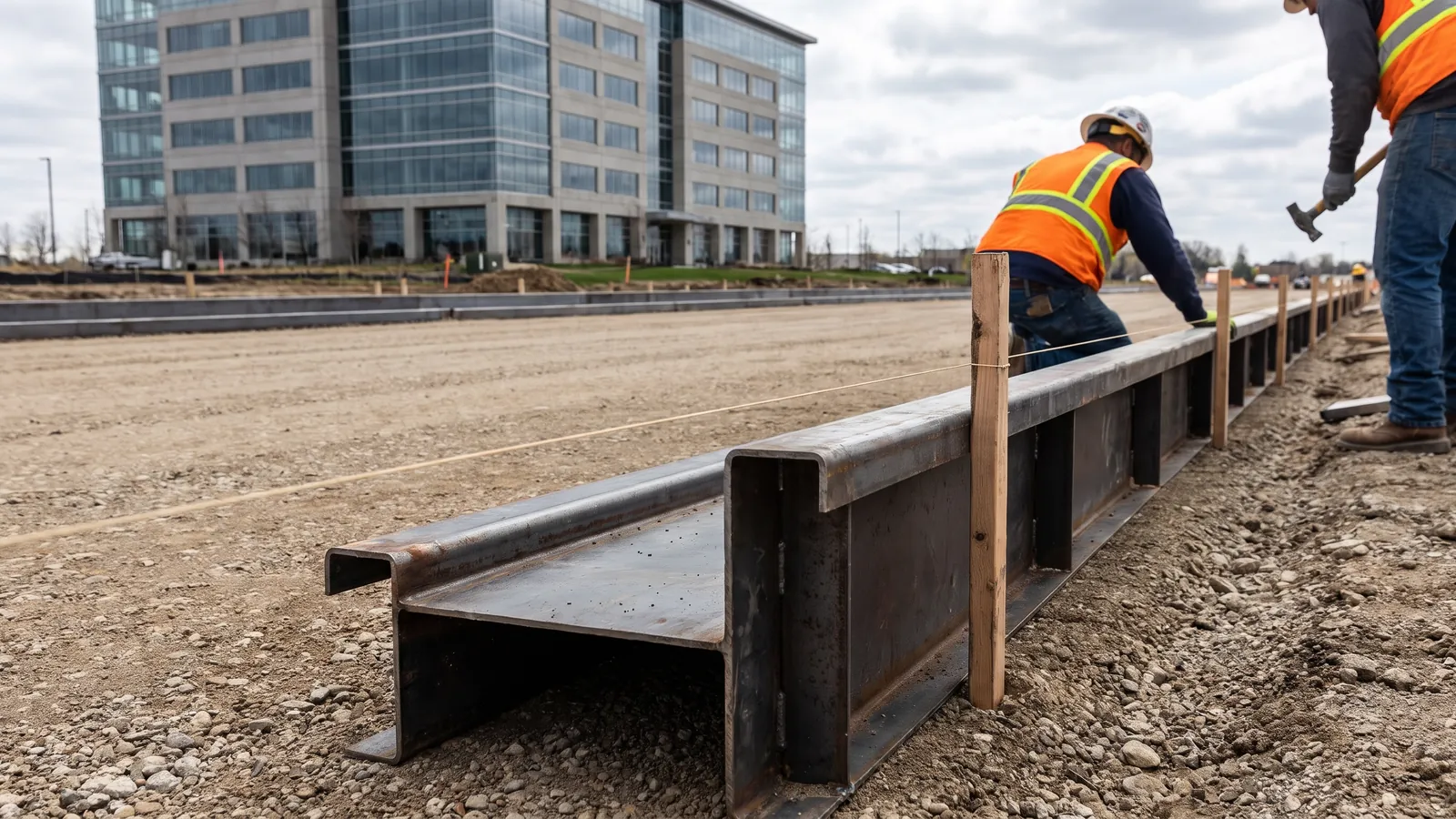
Built to the civil plans
Pavement thickness, steel and joints per the engineer's design for the traffic and soil.
Heavy-load areas
Dumpster pads, fire lanes and dock aprons thickened and reinforced for turning trucks.
Phased to stay open
Work sequenced so customers, tenants and deliveries keep moving.
Curb, gutter and ramps
Curb and gutter, sidewalks and accessible ramps formed and finished to the plans.
Panel replacement
Failed sections of existing lots cut out and replaced with a stronger section.
Permits and inspections
City of Houston commercial right-of-way permits and inspections coordinated.
Commercial concrete prices in Houston
| Item | Typical 2026 range | Notes |
|---|---|---|
| Parking area paving, 5–6 in | $8 – $14 per sq ft | Per the civil design |
| Dumpster pad and approach, 7–8 in | $3,500 – $9,000 | Heavier steel |
| Dock apron or truck pad | Quoted from plans | Thickness set by loads |
| Curb and gutter | $25 – $45 per linear ft | Formed or slip-formed |
| Accessible curb ramp | $1,800 – $4,500 each | Detectable warning included |
| Panel replacement in an existing lot | $12 – $22 per sq ft | Saw-cut, base, dowels |
These are Houston-area budgeting ranges for 2026, not quotes. Your price comes on a free written estimate after we measure, with each line itemized.
On the job
Questions about commercial concrete
Do you work nights and weekends?
When the property needs it and the pour can be scheduled safely, yes. Many retail and church lots are best done in phases over weekends.
Why does our dumpster pad keep breaking?
Because the hauler's truck stops and lifts a heavy container in the same spot every week, and the pad was poured like a parking stall. A thicker, more heavily reinforced pad that extends under the truck's front wheels solves it.
Can you work from our engineer's plans?
Yes, and for most new paving we prefer to. We'll raise any questions about the section or the joints with your engineer before pouring.
Do you handle accessible routes?
We form and pour ramps, walks and parking-area slopes to the plans and the slope limits they call for. The design responsibility for accessibility rests with the project's designer.
Can you pour for an HOA or apartment complex?
Yes: sidewalks, curbs, mail-kiosk pads, pool decks and drive lanes, scheduled around residents.