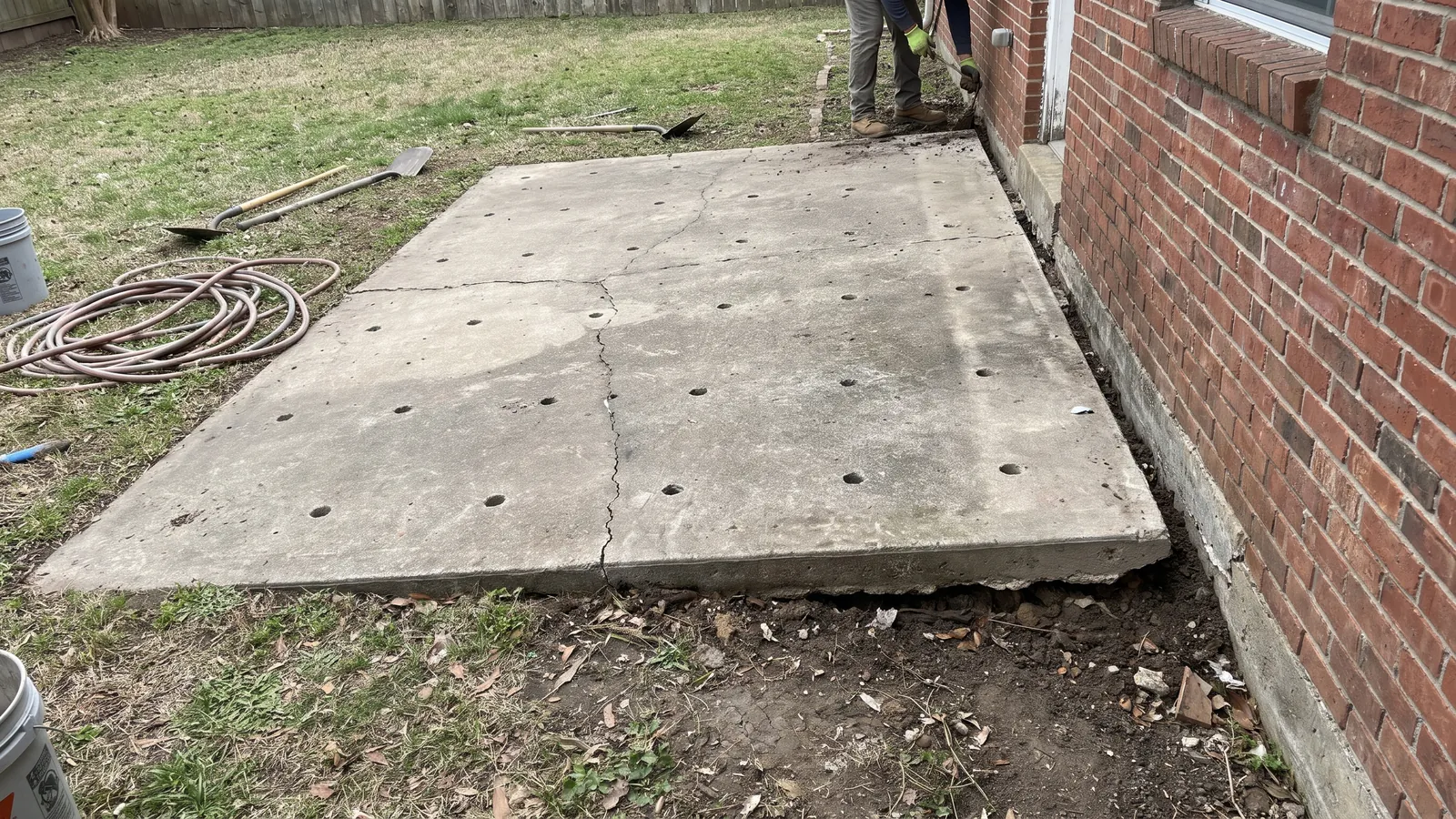
Slabs sink in Houston for predictable reasons. Base under the edge of a driveway washes out where a downspout empties beside it. Clay under a patio shrinks in a long dry spell and the slab drops at the low side. Soil settles next to a newer house where fill was placed around the foundation. A sidewalk panel sinks where a broken irrigation line has been running under it. Whatever the cause, the result is a step at the joint, a puddle where none used to be, or a patio that now pitches back toward the house.
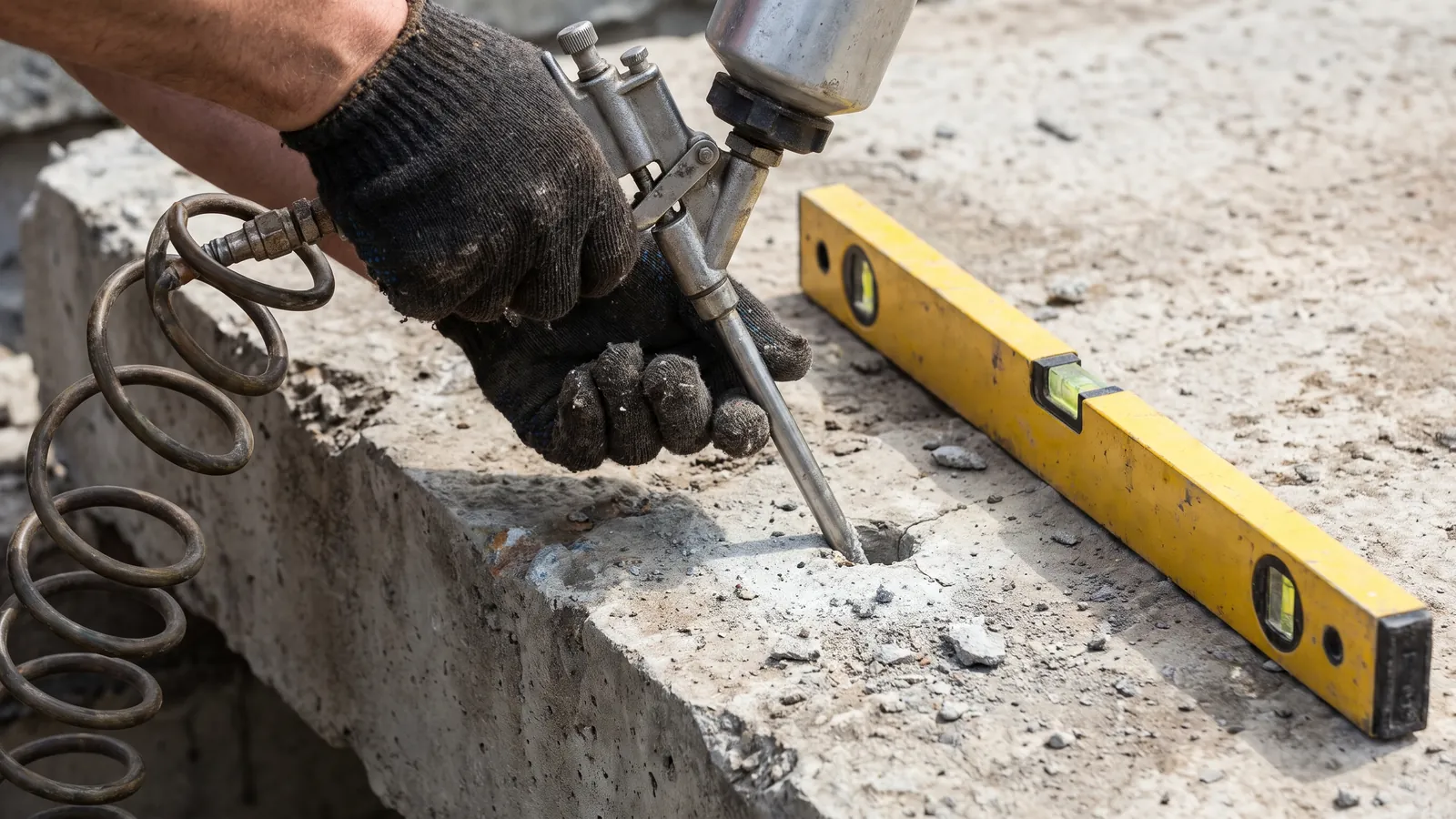
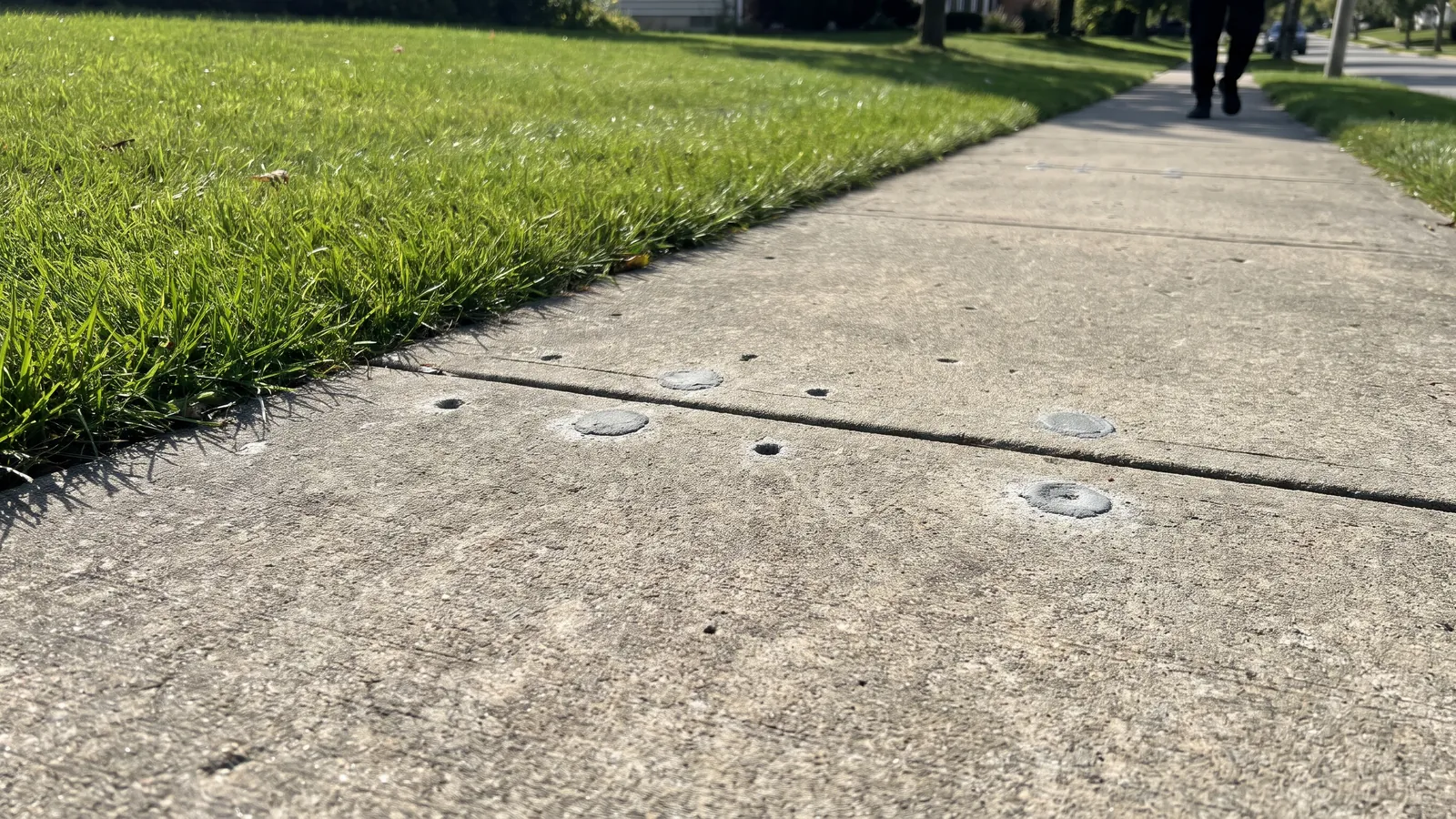
Leveling, also called slab lifting or slab jacking, fills the void under the panel and pushes it back up. There are two methods. Polyurethane foam is injected through small holes about the size of a coin; it expands under the slab, lifts it precisely, weighs very little so it doesn't load the soil, cures in minutes, and isn't affected by water. Cement slurry, often called mudjacking, pumps a grout mix through larger holes; it costs less per job on big voids but is heavier, and the holes are more noticeable. We recommend foam on most residential work on clay and say so plainly when slurry is the better value.
The process is quick. We drill the holes in a planned pattern, inject while watching the slab with a level and string line so it comes up evenly, stop at the line we agreed, patch the holes with cement-colored grout, and seal the joints we've just reset so water stops getting under them. Most jobs are finished in a few hours and the slab can be walked or driven on the same day.
Leveling is not for every slab. A panel that's broken in pieces, heaved up by a root rather than dropped, or so thin and cracked it won't lift in one piece needs repair or replacement. And leveling a slab without fixing why it sank invites the void to come back, so downspouts, drains and leaks are part of the visit.
What the job includes
Foam or slurry, explained
Polyurethane foam for most clay sites; cement slurry where large voids make it the better value.
Small, patched holes
Injection holes drilled in a planned pattern and filled with matching grout afterward.
Lifted to a line
The slab raised evenly while checked with a level and string line, stopping at the agreed height.
Joints sealed after
The joints between lifted panels sealed so water stops reaching the soil underneath.
Same-day use
Foam cures in minutes; most lifted slabs can be used the same day.
The cause addressed
Downspouts, sprinklers and leaks that washed out the base pointed out and fixed or flagged.
Leveling prices in Houston
| Item | Typical 2026 range | Notes |
|---|---|---|
| Lift one sidewalk or patio panel | $400 – $900 | Minimum visit applies |
| Polyurethane foam leveling | $6 – $12 per sq ft | Depends on void size |
| Cement slurry (mudjacking) | $4 – $8 per sq ft | Larger holes, heavier fill |
| Driveway panels at the garage | $800 – $2,000 | Common on newer homes |
| Pool deck panel lift | $700 – $1,800 | Careful near the coping |
| Joint sealing after lifting | $3 – $6 per linear ft | Recommended every time |
These are Houston-area budgeting ranges for 2026, not quotes. Your price comes on a free written estimate after we measure, with each line itemized.
On the job
Questions about leveling and slab lifting
How long does leveling last?
Foam doesn't wash out or break down under the slab, so the lift itself lasts. Whether the slab stays level depends on the soil and the water. Fix the downspout or leak that caused the void and a lifted slab can stay put for many years.
Is foam better than mudjacking?
On most Houston residential work, yes: smaller holes, lighter weight on clay, faster cure, more control. Slurry costs less on large, deep voids and still works well. We'll recommend one and explain why.
Can you level a slab that's cracked?
If the pieces are large and sound, often yes, and the crack is sealed afterward. If it's broken into small pieces, it won't lift as one surface and replacement is better.
Will leveling fix a patio that slopes toward my house?
Usually. Lifting the low edge restores the fall away from the foundation, which is often the most valuable result of all.
Can you lift my house foundation?
No. Foundation lifting under a house is a different, engineered process done by foundation repair companies. We lift driveways, walks, patios, steps and pool decks.